I went to buy a phone and came back with a coffee invitation. If you are thinking about whether to settle in Dehradun, here is the one thing no spreadsheet will tell you.
Last month I went to buy a phone. Living in Dehradun has a way of turning small errands into conversations, and this one proved it. If you have ever wondered whether you could settle in Dehradun or in any smaller city, what happened next says more than a ranking of cities ever will.
I parked my two-wheeler outside the shop, and before I had taken off my helmet, the owner was looking at my number plate.
“MH 12,” he said. “Pune?”
“Yes,” I said.
That was it. Two words, and the shop stopped being a shop.
I want to slow down on that moment, because it is easy to rush past. A stranger looked at a piece of metal on the back of my bike and saw a place. A place meant a story, and he wanted the story. He did not ask for my budget first. He did not ask which brand. He asked where I was from, and then he waited for the answer.
When did that last happen to you? Not a friend asking. Not a colleague making small talk before a meeting. A stranger, in the middle of an errand, who actually wanted to hear it.
He Had Been Where I Was From
He had studied in Pune. Talegaon, to be exact. He loved the city, and he talked about it the way people talk about a place that shaped them. I knew the tone, because it is the one I use.
He is originally from Mussoorie. After Pune, he joined the merchant navy and spent years at sea. Then he took an early retirement, and now he owns this mobile shop. He had come back to the hills he started from.
His wife runs a small bakery. He is, by his own description, a serious coffee person.
Then he asked what I do.
I told him the truth. I retired early, I moved here, and I run retreats.
I expected the polite version of interest, the kind where someone nods and glances at the clock. It did not come. He wanted to know how it happened, why Dehradun, and what the first year felt like.
So we talked. Careers. The weather here. The quiet. The birds we both see in our neighbourhoods, which I did not expect to be a topic that could carry on a long conversation.
At some point I realised I had not touched a single phone. I had walked in with a task, and somewhere in the middle of that conversation the task quietly stepped aside. Neither of us noticed.
Where I Am Coming From
Let me give you some context, because it matters.
I spent two decades in corporate HR, almost all of it in big cities, and most of it in Pune. I retired at 45 and moved to Dehradun. I have been here long enough to stop being a visitor, and not long enough to stop noticing the difference.
I mention this because I did not arrive with romantic ideas about small towns. I am a person who lived the city version of life properly and liked parts of it. I know the energy. I know what it feels like to be part of something that moves fast.
So when this happened, I noticed it. I had a clear sense of what buying a phone is supposed to feel like, and this was not it.
If you want to settle in Dehradun or anywhere smaller, you may be quietly wondering whether you will always feel like an outsider. A new city, a new accent, and people who have known each other for forty years. It is a fair worry, and I carried a version of it myself. What I did not expect was that the first crack in that worry would come from a stranger at a phone counter.
What a Phone Shop Usually Feels Like
I have bought phones in Pune too. I have walked into many shops in big cities, and I can tell you exactly how it usually goes.
You say what you want. Someone shows you three options. You compare prices, pay, and leave.
You know this script by heart. You could perform it half asleep, and most days you do. Nobody does anything wrong. That is what makes it hard to name it. There is no rudeness to point to, no bad service to complain about. The transaction is clean, quick and correct.
But nobody in those shops ever read my number plate. Nobody asked where I was from, and nobody wanted to hear my answer.
I am not complaining about it. In a big city, that distance is part of the deal. You trade being known for being fast, and most of the time, that trade feels fair. For years, I thought that was simply what a city is.
I am not sure it has to be that way.
The Price Nobody Quotes
Here is the part I did not understand until that Monday.
When you live inside the trade, you stop feeling its cost. The cost is quiet. It does not arrive as a bill. It arrives as a slight flatness you have learned to call normal.
You may know it. You walk through your day among thousands of people, and almost none of them know your name. The courier who has come to your door for two years. The person at the counter who says “next” without looking up. The neighbour you pass in the lift and nod at. Everyone is efficient. Everyone is polite. And if you stayed away for a month, hardly anyone would notice that you were gone.
You do not feel lonely, exactly. You are busy, and the city is full. That is why the feeling is so easy to miss. It sits underneath, unlabelled, and shows up on an ordinary evening as a small question you push away. Does anyone around here actually know me?
Come home to that every evening for years, and it becomes the background hum of your life. You eat, you scroll, you sleep, and you have not been asked a single question all day that was not a task. Nobody who lists reasons to settle in Dehradun mentions this, because nobody thinks to. It is hard to see a thing you have never been without.
I did not know I had been carrying that question until a stranger asked me where I was from and waited for the answer.
Not Only Here, But Here
I should be careful about something. I cannot tell you this only happens in Dehradun or in tier-2 cities. I am sure it happens in Mumbai too, in some shop, with some person. Warmth is not owned by a postcode.
What I can tell you is what I noticed.
Here, the person behind the counter had time. And he treated me as a person before he treated me as a customer. The sale was almost an afterthought.
That small difference is something I did not know I had been missing until I got it back. Anyone who tells you to settle in Dehradun for the weather and the mountains has told you the smaller half of the story. It is the same thing I wrote about when I looked at why I have a better social life here than I ever had in Pune. It is not that people in smaller cities are nicer. It is that the structure of the day leaves room for the conversation to happen.
The Third Place
There is a term sociologists use for the places that sit between home and work: the third place, a phrase from the sociologist Ray Oldenburg. The neighbourhood cafe. The barber. The shop where the owner knows your name.
In the cities where I lived, my third places were mostly digital. A group chat. A LinkedIn feed. Conversations with people who were far away and whom I rarely saw.
I do not want to sound ungrateful. Those connections were real, and some still are.
But a conversation with a person standing in front of you, about nothing in particular, does something that a message thread does not. It reminds you that you are part of a place, not only a person passing through it.
I did not know I had gone without that until a stranger asked me where I was from.
The Cake
One more thing, because it made me smile all the way home.
I bought a Vivo V80. It turned out I was the first customer in that shop to buy one since it launched. The Vivo team had arranged a cake, and they asked me to cut it.
I stood there with a knife and a cake in a phone shop, a little embarrassed and quite delighted. In a big-city shop, a customer would have been just a number. Here I was a small occasion.
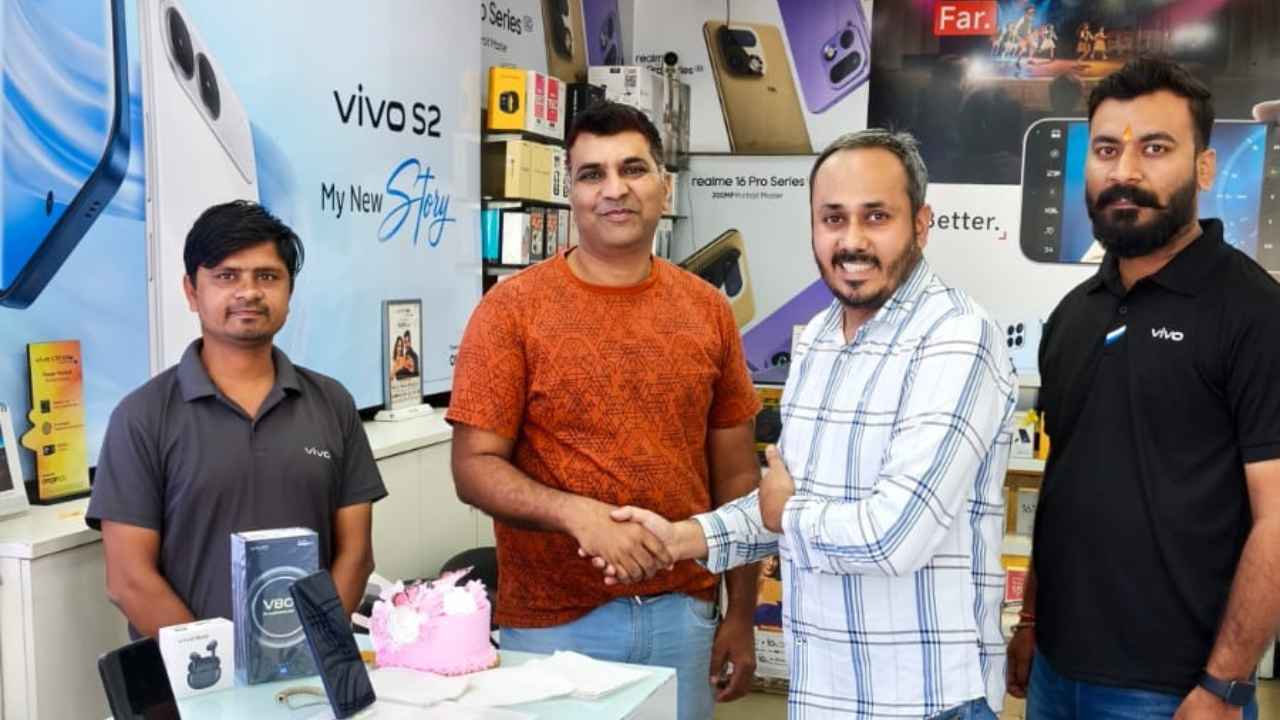
I do not think I have ever been welcomed like that for buying a phone.
What I Felt Walking Out
When I walked out, I felt happy and amused. And a bit puzzled.
It was a first for me. I do not have a good name for that feeling. It was not excitement. It was closer to being recognised, but by a stranger, over nothing in particular. It is a strange thing to be moved by a phone shop, and I was. Living in Dehradun does that to small things: it gives them room to matter.
If someone asked me today why to settle in Dehradun, I would not start with the hills. I would tell them about this. Before I left, he invited me over for coffee at his cafe.
I am going next week.
Before You Settle in Dehradun, Ask This
Here is what this made me think about the people I talk to.
Many of them are weighing a move out of a big city. They ask good questions. What does it cost to live there? How are the schools? How far is the airport? Is there a decent hospital? How is the internet?
These are the right questions, and I help people work through them. If you are trying to decide whether to settle in Dehradun, you should ask every one of them.
But nobody asks the question I would now add to the list. Will someone there know my name?
You cannot find that in a spreadsheet. You cannot get it from a city ranking. And it may matter more to how you feel on an ordinary Tuesday than most of the numbers you will compare. If you are asking whether to settle in Dehradun, this is the question that decides whether the answers to the other ones will make you happy.
Maybe you are reading this on a Sunday night, in a flat you pay a great deal for, in a city that gives you almost everything. The job is good. The salary is good. And somewhere under all of it, a quiet sense that you are missing something you cannot put a price on. That is not ingratitude. That is information.
Try this. Picture a normal Tuesday three years from now in the city you live in today. The morning, the commute, the meetings, the evening. Now count the moments in that day when someone looks at you and sees a person, not a role. If you struggle to find even one, that is worth sitting with before you decide anything. It is the same question I ask in the FIRE Tuesday Test, and it is rarely about money.
What I Gave Up
People ask me what I gave up when I left a big city.
I used to answer with the obvious things: the restaurants, the events, and the pace.
I have a different answer now. I gave up a certain kind of anonymity. And I am slowly learning that anonymity was never as comfortable as I thought. If you settle in Dehradun, expect to give it up too, and decide in advance whether that feels like a loss or a relief.
I did not move to Dehradun to make friends with a mobile shop owner. But that is what happened on a Monday, at a parking spot, because of a number plate. When I think about life in Dehradun a year in, and about what living in Dehradun has actually given me, it is moments like that, and not the view or the weather, that I would tell you about first. I wrote about the early days in the house I moved into, and in, In Pune, Nobody Came. In Dehradun, I Have to Say No, and the pattern keeps repeating.
You may be wondering whether it is hard to settle in Dehradun when you know nobody. I think the more useful question is how long you can stay a stranger when people keep asking where you are from. Some of the best parts of a slower life are things you cannot plan for. You find them when you stop to have a conversation.
I will let you know how the coffee is.
Should You Settle in Dehradun? Test It First
If you are thinking about whether to settle in Dehradun or in any smaller city after years in a tier-1 one, this is the kind of thing that does not show up in any spreadsheet. It is exactly why we built Nishchay: to help you test whether a smaller city fits your life before you commit to it. You can settle in Dehradun on a spreadsheet and still get it wrong. You can also test it slowly with your own Tuesdays and know.
One question to carry with you: when did a stranger last wait to hear where you were from?